Chiedici informazioni
Lingua
Selecting the right titanium alloy bar supplier comes down to four verifiable core criteria:
If a supplier cannot fully document all of the above, even a competitive quote may introduce downstream risks in manufacturing, regulatory registration, and in-service performance.
The production and processing characteristics of titanium and titanium alloys differ substantially from steel and aluminum, imposing significantly higher demands on process control and quality management.
Titanium presents several material-specific challenges:
Minor deviations in melting practice, shielding atmosphere, forging schedule, or heat treatment can result in:
These defects are generally undetectable by visual inspection and can only be verified through specialized testing equipment. The quality gap between a capable titanium manufacturer and a generic metal supplier is therefore far wider than in conventional steel supply chains. Supplier evaluation must go beyond material specifications to assess production systems, process capability, and quality management maturity.
A professional titanium supplier serving industrial, aerospace, and medical device sectors should maintain stable production capability across commercially pure titanium and titanium alloy grades to address varying application requirements.
| Grade | UNS Number | Material Type | Typical Applications |
|---|---|---|---|
| Grade 1 | R50250 | CP Titanium | Chemical process equipment, corrosion-resistant piping, light-duty formed components |
| Grade 2 | R50400 | CP Titanium | Heat exchangers, marine engineering equipment, industrial structural components |
| Grade 3 | R50550 | CP Titanium | Pressure vessels, high-strength corrosion-resistant industrial parts |
| Grade 4 | R50700 | CP Titanium | Dental implants, medical device components, high-strength fasteners |
| Grade 5 | R56400 | Ti-6Al-4V | Aerospace structural parts, high-strength engineering components |
| Grade 9 | R56320 | Ti-3Al-2.5V | Precision tubing, sporting goods, lightweight mechanical parts |
| Grade 23 | R56407 | Ti-6Al-4V ELI | Surgical implants, orthopedic devices, dental implants, implant-grade medical components |
The fundamental distinction between commercially pure titanium and titanium alloys lies in the balance among strength, ductility, and fatigue performance. For example:
A professional supplier should recommend grades based on the customer's load conditions, fatigue life requirements, service environment, and regulatory requirements — not simply sell from available stock.
Recognized standards and quality system certifications are essential benchmarks for evaluating titanium supplier capability. Applicable standards typically define chemical composition ranges, mechanical property requirements, dimensional tolerances, and inspection and acceptance criteria.
Material test certificates (MTC) or certificates of conformance (COC) issued by the supplier should explicitly identify the standard reference — not simply state "meets international standards."
ASTM F67 — Standard specification for unalloyed titanium for surgical implant applications, covering Grade 1 through Grade 4 medical-grade CP titanium.
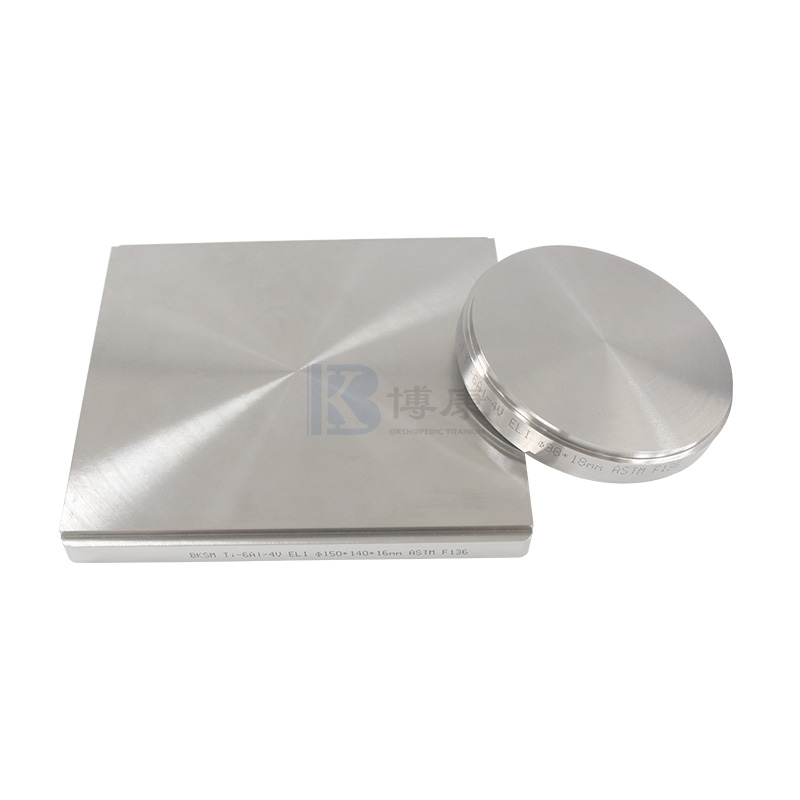
ASTM F136 — Standard specification for Ti-6Al-4V ELI (Extra Low Interstitial) alloy for surgical implant applications. Imposes more stringent limits on oxygen and other interstitial elements compared to industrial-grade Ti-6Al-4V.
ASTM B348 — Standard specification for titanium and titanium alloy bar and billet, widely used in industrial, aerospace, and structural applications.
| Standard | Product Form |
|---|---|
| AMS 4928 | Ti-6Al-4V bar and forgings |
| AMS 4965 | Ti-6Al-4V ELI bar |
| AMS 4967 | Ti-6Al-4V ELI wire |
These standards are widely referenced for aerospace structural components and aeroengine-related parts.
The ISO 5832 series provides internationally recognized specifications for implant-grade metallic materials, serving as a key reference for material selection and technical documentation in medical device applications. Relevant parts include:
For medical sector procurement, material standard compliance alone is insufficient. Suppliers should also hold ISO 13485:2016 Medical Device Quality Management System certification, with a scope covering batch traceability management, document control, CAPA (corrective and preventive action) management, and risk management processes. This certification is a fundamental baseline requirement for medical-grade titanium supply chains.
The purity, microstructural uniformity, and mechanical performance of titanium alloy bar are largely determined before machining begins. A professional supplier should maintain the following complete production process:
The triple VAR route is widely applied in the production of premium medical-grade and aerospace-grade titanium. Compared to conventional single or double melt processes, it effectively:
For medical and aerospace applications, triple VAR processing is typically a mandatory audit item in supplier qualification reviews.
The reliability of a test report depends on the testing equipment and laboratory capability behind it. For medical and aerospace orders, a professional supplier should implement rigorous in-process and final inspection protocols.
Conducted via fully automated diameter measurement and eddy current testing to verify dimensional accuracy and detect near-surface cracks, folds, laps, and similar surface discontinuities.
Ultrasonic testing (UT) is used to detect internal cracks, shrinkage defects, and non-metallic inclusions. Depending on product specification and applicable standard requirements, 100% ultrasonic testing may be applied to qualifying product dimensions.
Verifies conformance of key elements including oxygen (O), nitrogen (N), hydrogen (H), iron (Fe), and alloying elements against specification limits.
Includes tensile testing, hardness testing, metallographic microstructure analysis, and surface roughness measurement to verify that material properties and surface condition meet customer technical requirements.
Buyers should also confirm whether the supplier's laboratory holds ISO/IEC 17025:2017 accreditation, which indicates that testing capabilities have been independently assessed and recognized by a third-party accreditation body.
Real-world projects frequently require non-standard specifications. Suppliers with a complete in-house production system are better positioned to fulfill custom requirements efficiently.
| Parameter | Supply Range |
|---|---|
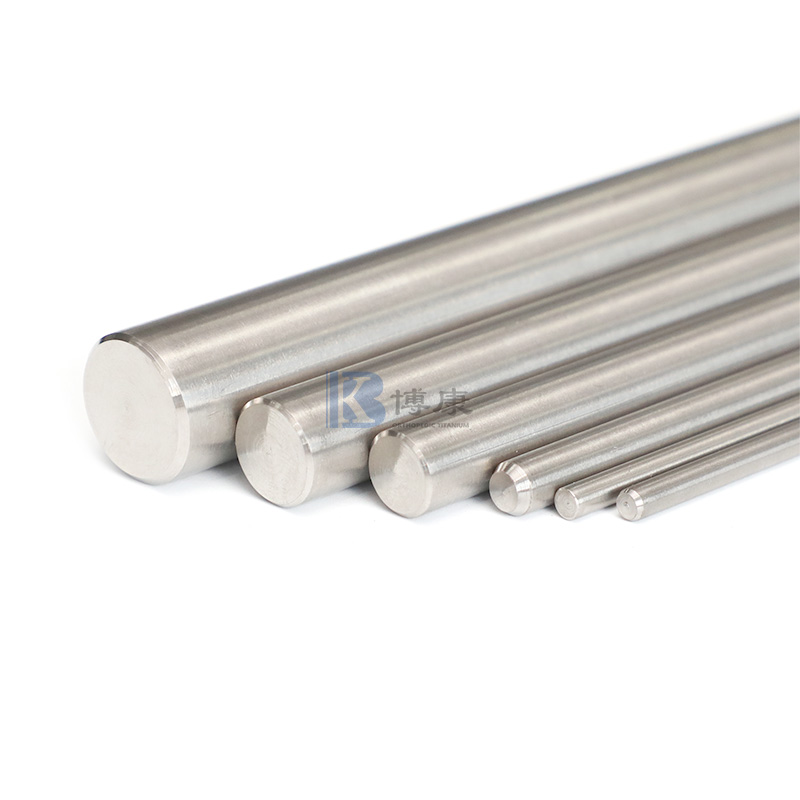
| Diameter | 1 mm – 101.6 mm |
| Length | 500 mm – 4,000 mm |
| Tolerance Class | h6, h7, h8, h9 |
| Delivery Condition | Annealed (M), Cold Worked (Y), Hot Worked (R) |
Full in-house production helps to maintain complete batch traceability, reduce subcontracting risk, shorten lead times, and improve product consistency.
Changzhou Bokang Special Materials Technology Co., Ltd. (Bokang Titanium) maintains a complete manufacturing system from raw material processing through to finished titanium bar production.
The company holds the following certifications:
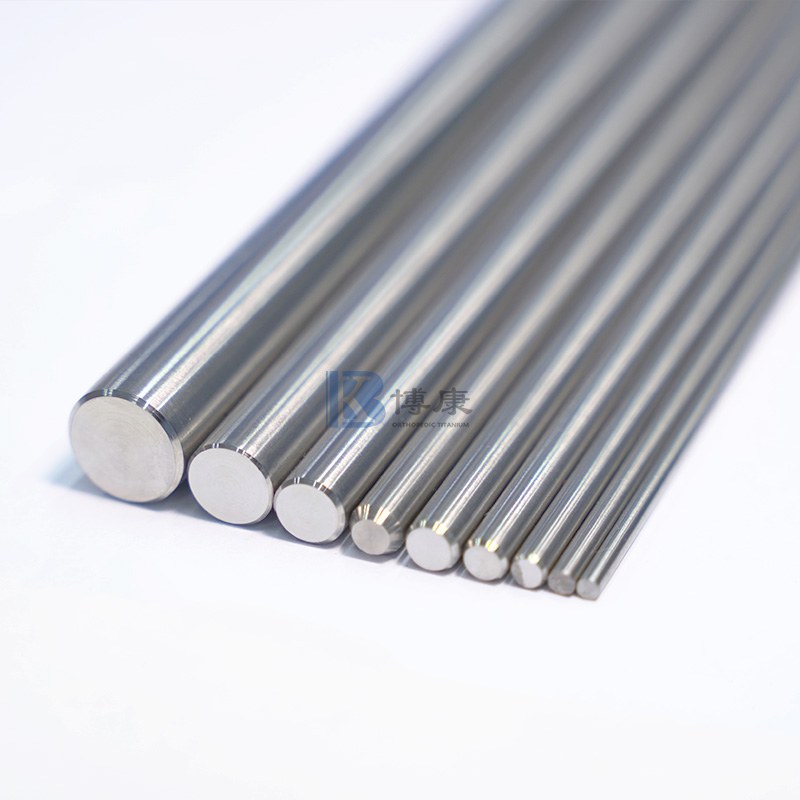
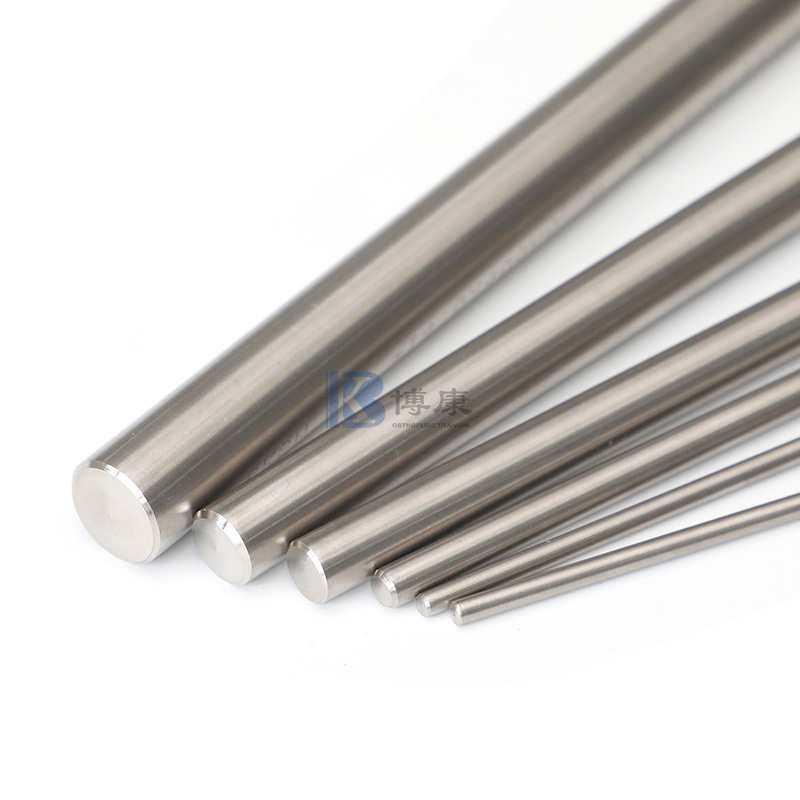
Bokang supplies titanium and titanium alloy bar in Grade 1, Grade 2, Grade 3, Grade 4, Grade 5, Grade 9, and Grade 23, with products meeting ASTM B348, ASTM F67, ASTM F136, AMS, and ISO 5832 requirements across applicable grades and delivery conditions.
Available options include tolerance classes h6, h7, h8, and h9; custom diameters and lengths; and multiple surface finish conditions.
Prior to shipment, all products undergo — in accordance with applicable specification and standard requirements — 100% automated diameter inspection, 100% eddy current testing, and 100% ultrasonic testing for qualifying dimensions, ensuring compliance with the stringent material quality and consistency requirements of medical, aerospace, and industrial applications.
Copyright © 2024 Changzhou Bokang Tecnologia dei materiali speciali Co., Ltd. All Diritti riservati.
Produttori di aste in titanio puro tondo personalizzato Privacy